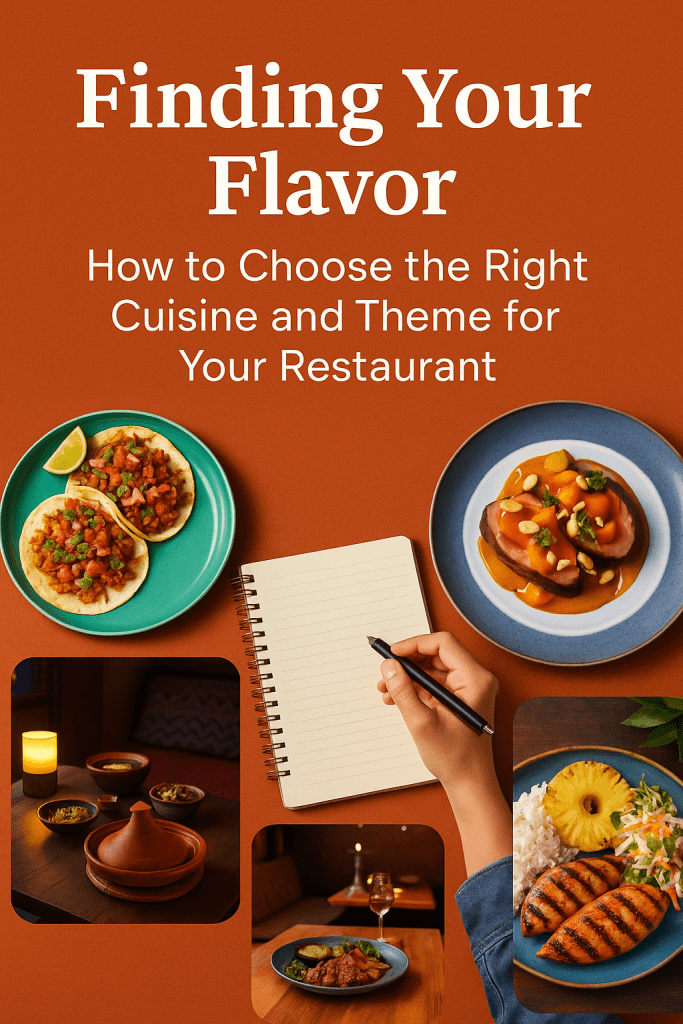
Opening a restaurant isn’t just about cooking delicious food — it’s about creating a memorable experience. One of the most critical decisions you’ll make on this journey is choosing your cuisine and concept theme. It sets the tone for everything else: your brand identity, menu, pricing, décor, service style, and even your customer base.
So how do you find the flavor that feels like you — and that your guests will crave again and again? Here’s how to discover the perfect combination of cuisine and concept for your restaurant.
1. Start with Your Passion
The most successful concepts are rooted in authenticity. What type of food excites you? What dishes do you love to cook — or eat? What cuisines tell your story, your heritage, your travels, or your creativity?
Whether it’s Italian trattoria fare, Japanese izakaya, modern plant-based cuisine, or a regional fusion that doesn’t yet exist — passion is the fuel that will keep you going long after the grand opening.
Pro tip: Start journaling your favorite food memories, ingredients, cooking techniques, or restaurants. Look for patterns — that’s your culinary identity speaking.
2. Understand Your Market
It’s not just about what you want to cook — it’s about what your community wants to eat. Research your local area:
- What types of cuisine are already popular — or over-saturated?
- What demographics live, work, or travel near your ideal location?
- Are there unmet needs, like healthy lunch spots, upscale comfort food, or globally inspired bites?
Understanding your audience helps you find a niche that feels exciting but still relevant and viable.
3. Match the Cuisine with an Experience
Cuisine is what you serve. Concept is how you serve it.
Are you imagining a fast-casual concept with street-style tacos and neon lights? A fine dining Moroccan tasting menu with belly dancers and tagines? A tropical beach shack serving Caribbean rum punches and jerk chicken?
Your theme adds emotional and sensory depth. It creates the vibe — the music, the lighting, the décor, the service flow. Together with your food, it tells a cohesive story.
4. Consider Your Skill Set and Resources
Do you have a chef trained in French technique? Are you planning to hire a team skilled in wok cooking or wood-fired pizza ovens? Will your kitchen be equipped for high-speed service or slow, complex preparation?
Choosing a cuisine that aligns with your strengths (and limitations) is key to consistent quality and smooth operations.
Bonus thought: Some cuisines are more labor-intensive, expensive, or ingredient-specific. Be realistic about what’s sustainable for your team and your budget.
5. Identify Your Unique Angle (USP)
In a competitive market, differentiation is everything. What will make your ramen bar, vegan café, or wine bistro stand out?
- Local ingredients?
- A secret family recipe?
- A rotating seasonal theme?
- Pairings with craft cocktails or live music nights?
Your USP (Unique Selling Proposition) is the reason people choose you — and return.
6. Test the Waters
Still torn between concepts? Try soft-testing through:
- Pop-up events
- Weekend takeovers in existing venues
- Catering gigs
- Private tasting parties
- Surveys or polls on social media
Testing helps you validate your idea, get early feedback, and build buzz before you fully commit.
7. Stay True to the Story
Trends come and go. Themed experiences rise and fade. But a strong restaurant concept lasts when it’s rooted in your story — your why.
Whether it’s honoring your roots, reimagining a food memory, or expressing your creativity in every detail, let your restaurant tell a tale that only you can tell.
Final Thoughts
Choosing the right cuisine and theme is not just about market trends or cool ideas — it’s about resonance. When your concept aligns with your passion, your audience, and your operations, magic happens. Your restaurant becomes more than a place to eat. It becomes a destination.
So dig deep, dream big, and don’t be afraid to mix it up. Because in the end, your flavor is your future.
🚀 Do You Want to Learn More?
Click the following link to dive deeper into making your restaurant dream a reality:
👉 How To Build Your Dream Restaurant
 HTS-Hospitality Team Services